Across multiple continents, a growing number of nations are opening their doors to Canadian travellers in an expanding wave of global tourism access. Governments throughout Europe, Asia, the Caribbean, Africa and the Americas are competing to attract Canadian visitors by offering visa-free entry, digital travel approvals and simplified border procedures. Popular destinations including the United States, Mexico, France, Spain and Italy continue to receive millions of Canadian tourists every year.
Tourism authorities recognise that Canadians tend to travel frequently, spend generously and stay longer than many other travellers. As a result, airports are expanding terminals, airlines are launching new international routes and tourism boards are rolling out major marketing campaigns aimed at Canadian travellers. The international tourism industry increasingly understands that welcoming Canadian tourists helps strengthen national economies and boosts global tourism influence.
Europe Leads Efforts to Attract Canadian Visitors
– Europe remains at the forefront of the global push to attract Canadian tourists with welcoming travel policies. The Schengen Area allows Canadians to move freely across multiple European nations for up to ninety days without requiring a visa. Countries such as France, Spain, Germany, Italy and Portugal consistently rank among the top destinations for Canadian travellers.

– Major cities including Paris, Rome and Barcelona continue to see steady flows of visitors from Canada each year. European governments have also introduced digital travel systems and simplified entry procedures designed to make travel easier and faster.
– Tourism officials say Canadian visitors play a vital role in supporting hotels, restaurants, cultural attractions and airlines. Because tourism revenue grows significantly when Canadian visitors arrive, European countries continue refining policies that make travel more convenient.
Asia and Pacific Destinations Expand Access for Canadian Travellers
Across Asia and the Pacific region, governments are introducing easier travel systems to attract more Canadian tourists. Countries such as Japan, South Korea, Singapore and Malaysia provide visa-free entry for Canadian passport holders, helping to encourage tourism growth. Tourism boards across the region actively promote destinations like Tokyo, Seoul and Singapore as vibrant cultural and culinary centres for travellers. Meanwhile, Australia and New Zealand also welcome Canadians through efficient electronic travel authorisation systems that simplify the entry process. These initiatives demonstrate how countries are strategically adjusting tourism policies to rebuild and expand their travel industries. As global tourism demand continues rising, Asia and Pacific nations are strengthening their infrastructure and travel systems to make journeys smoother and more appealing for Canadian visitors.
Caribbean Destinations Compete for Canadian Holiday Travellers
Tourism in the Caribbean depends heavily on Canadian visitors, especially during the winter travel season. Countries including Jamaica, the Bahamas, Barbados and Saint Lucia actively promote their destinations to Canadian tourists by maintaining visa-free entry and convenient travel access. Tourism ministries highlight the region’s beaches, tropical climate and vibrant island culture while encouraging Canadians to escape colder northern weather. Airlines frequently increase flight routes during peak winter months because resorts regularly welcome large numbers of Canadian travellers. Governments across the Caribbean continue investing in airport expansions, hospitality services and tourism marketing to strengthen their ability to attract this valuable travel market. As a result, Caribbean destinations increasingly compete with one another to capture a larger share of Canadian tourism each year.
Latin America Strengthens Tourism Strategies for Canadian Visitors
Several Latin American countries are also expanding tourism strategies aimed at Canadian travellers. Nations such as Peru, Argentina, Chile and Colombia have simplified entry requirements to make travel easier for Canadians. Tourism campaigns highlight iconic destinations like Machu Picchu, the Andes Mountains and Patagonia as countries work to attract adventure-seeking visitors. Governments across the region recognise that tourism growth accelerates when international travellers can enter easily. Airlines are launching additional routes connecting Canada with major Latin American cities, further strengthening travel links between the regions. By opening their borders and promoting cultural and natural attractions, these countries are positioning themselves as attractive destinations for Canadians looking to explore new travel experiences.
Africa and Middle East Destinations Expand Access for Canadians
Governments across Africa and the Middle East are also introducing travel policies designed to attract Canadian tourists. Countries such as Morocco, South Africa and Mauritius allow Canadians to enter visa-free, helping to encourage tourism growth from North America. In the Middle East, destinations including the United Arab Emirates and Qatar provide convenient visa-on-arrival programmes for Canadian travellers. Tourism authorities highlight desert landscapes, historical heritage sites and luxury travel experiences as key attractions for international visitors. Airports across these regions continue expanding infrastructure to accommodate long-haul travellers arriving from Canada and other countries. As global tourism competition intensifies, many nations across Africa and the Middle East are strengthening travel policies in order to attract more Canadian tourists.
Tourism Policies Help Countries Benefit from Canadian Travel Spending
Governments worldwide increasingly recognise the strong economic benefits that come when Canadian tourists visit their countries. Hotels experience higher occupancy rates, restaurants welcome more diners and tour operators expand services to accommodate growing demand. Tourism authorities understand that simplifying visa rules and travel procedures encourages more Canadians to visit. As a result, many governments are introducing visa waivers, electronic travel authorisations and targeted tourism campaigns specifically aimed at Canadian travellers. Industry experts say the economic impact of Canadian tourism can be felt quickly in local economies through job creation and business growth. This global competition to attract Canadian visitors continues intensifying each year as countries strive to strengthen their tourism industries.
Easter 2026 SASSA Old-Age Grants Create Frustration for Beneficiaries
For many South African pensioners, Easter 2026 SASSA Old-Age Grants are bringing unexpected frustration rather than relief. Traditionally, April is the month when beneficiaries receive an annual increase in their grant payments. However, the increases announced in the 2026 national budget are smaller than many recipients had anticipated. The National Treasury approved adjustments linked to the country’s inflation rate of 3.4 percent, significantly lower than the 4.8 percent increases provided in the previous year. As a result, many pensioners feel the new grant increases will not adequately cover rising living costs.
New Grant Amounts for 2026 Old-Age Beneficiaries
According to the latest government announcement, increases to SASSA old-age grants will amount to only R80 for approximately four million beneficiaries across South Africa.
Old-Age Grant for individuals aged 60 to 74 years will increase to R2 400 per month, up from the previous R2 320.
Old-Age Grant for individuals aged 75 years and older will rise to R2 420 per month, compared with the previous R2 340.
These modest increases have disappointed many beneficiaries who expected larger adjustments to help offset the rising costs of food, utilities and essential services.
Uncertainty Surrounds Easter 2026 Payment Dates
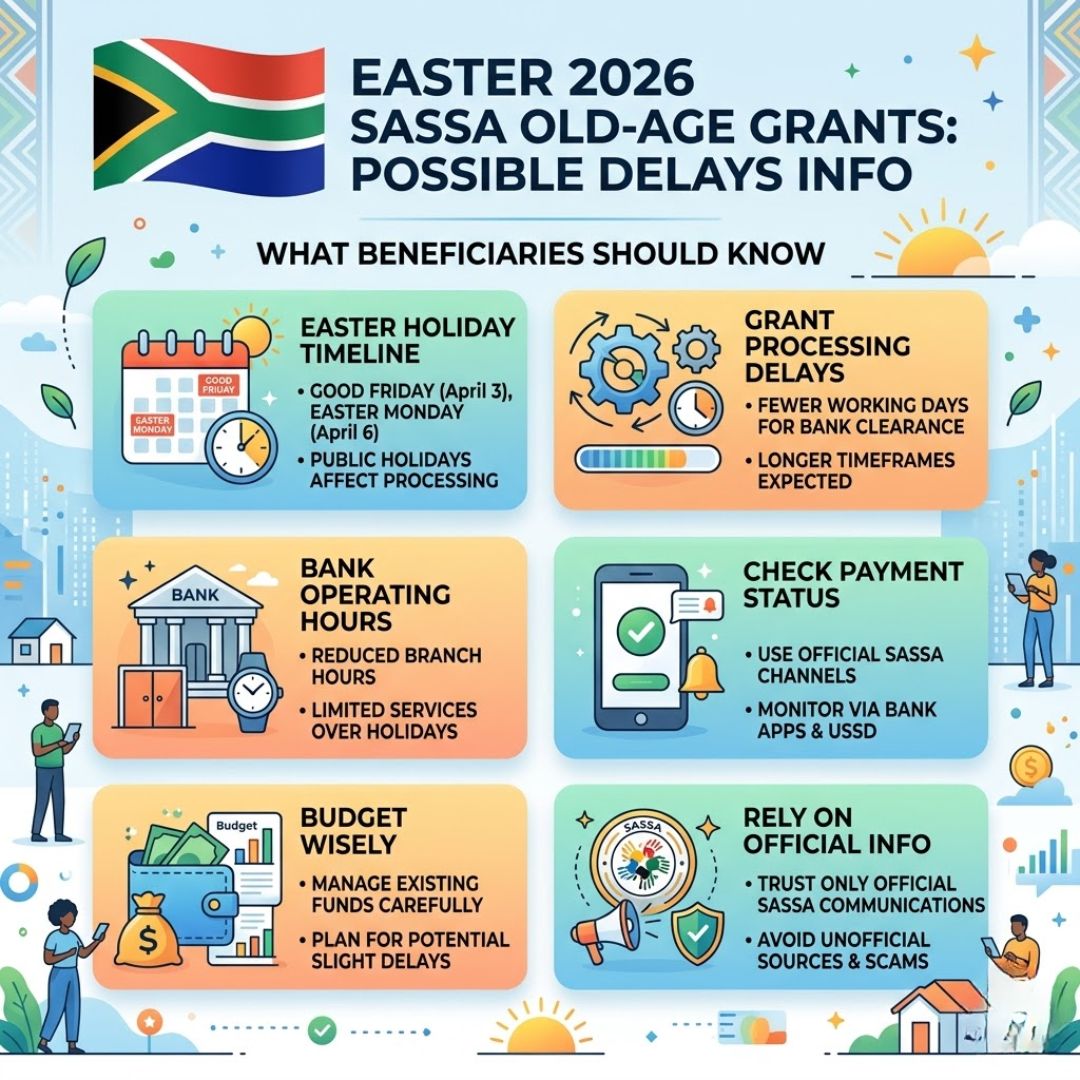
Another issue creating concern for pensioners is the uncertainty around payment dates during the Easter holiday period. Traditionally, SASSA old-age grants are paid on the first Tuesday of each month. In April 2026, the first Tuesday falls on 7 April, which is after the Easter long weekend. If the agency decides to move the payment schedule forward, grants could potentially be paid earlier to help beneficiaries prepare for the holiday period.
One possible schedule could see old-age grants paid on Wednesday 1 April, followed by disability grants on Thursday 2 April and children’s grants on Friday 3 April. However, the agency has not yet confirmed whether these changes will occur, leaving many beneficiaries uncertain.

Possible Delays Could Impact Easter Weekend
If the payment schedule is not moved forward, many SASSA beneficiaries may have to wait until after the Easter holiday weekend to receive their grants. This could place additional financial pressure on pensioners who rely heavily on these monthly payments for daily living expenses. The situation has created growing concern among beneficiaries who already feel the annual increase was too small to meet rising household costs.
Stricter Reviews Introduced for Grant Beneficiaries
SASSA has also confirmed that stricter grant reviews will be implemented as part of government efforts to control spending. Beneficiaries are advised to ensure that their personal details remain updated in case they are contacted for verification. The agency expects these stricter reviews to help save approximately R2 billion in 2026 and a further R1 billion in 2027.
Improved artificial intelligence systems now allow SASSA to monitor income more closely by cross-referencing information with other government databases including UIF, the Department of Home Affairs, NSFAS and major banking institutions.
Income and Asset Requirements for SASSA Old-Age Grants
To qualify for SASSA old-age grants, applicants must meet several eligibility conditions. Individuals must be at least 60 years old and must pass the agency’s income and asset means test.
Monthly income must be below R8 983 for single applicants or R17 980 for married couples.
This equals annual income limits of R107 800 for single individuals or R215 760 for married couples.
Applicants are also allowed to own property or other assets, but the total value must not exceed R1 524 600 for single applicants or R3 049 200 for married couples.
Documents Required When Applying for the Grant
Applicants must bring several important documents when visiting a SASSA office to apply for the old-age grant. These include:
Official South African identity document or Smart ID card
Certified three-month bank statement
Documents confirming marital status or spouse death certificate where applicable
Proof of residence such as a recent utility bill
Documents confirming income or financial dividends
Information about property or asset valuations
Details of any private pension payments
Unemployment Insurance Fund records or discharge certificate from a previous employer
Important Things to Know When Applying
Applying for a SASSA old-age grant can be difficult for elderly individuals, particularly those living in remote rural areas or experiencing health challenges. Because there are no online application forms available, applicants must visit a SASSA office in person. However, a family member or trusted representative may assist with the application process if the applicant provides a letter from a doctor explaining their situation.
All documents must be certified by a commissioner of oaths at a police station before submission. Applications may take up to three months to process, although successful applicants will receive backdated payments from the date the application was submitted. If an application is rejected, applicants have up to 90 days to appeal the decision.
How to Contact SASSA for Assistance
Beneficiaries who need assistance or additional information can contact SASSA through several official channels. Although offices often experience long queues, the agency provides the following contact options:
SASSA toll-free helpline: 0800 601 011
SASSA Head Office: 012 400 2322
Email enquiries: [email protected]
The final payment dates for Easter 2026 SASSA old-age grants have not yet been confirmed. Current expectations suggest that payments may occur anytime between Wednesday 1 April 2026 and Tuesday 7 April 2026, depending on the agency’s final decision.