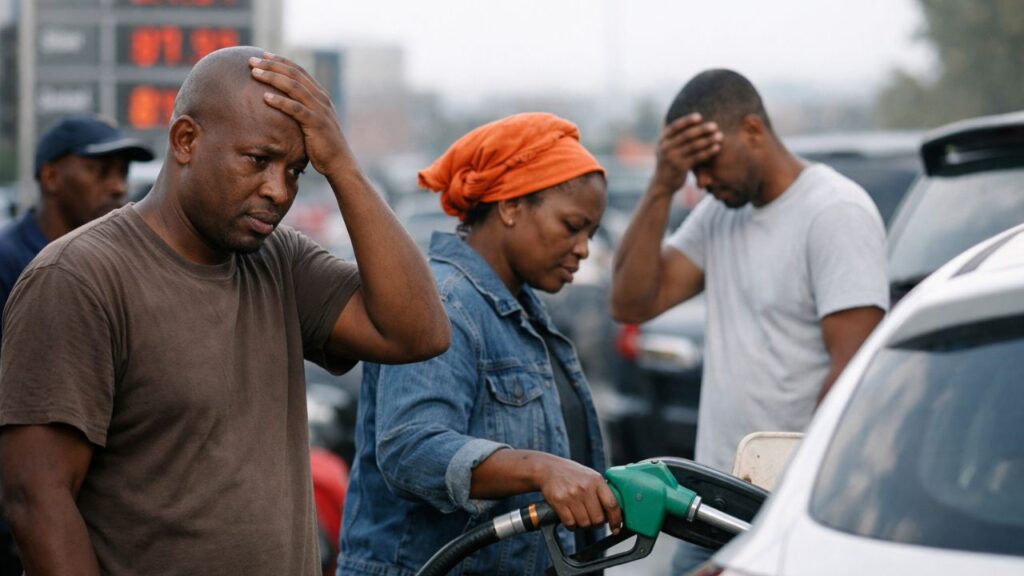
South African motorists could soon face a painful increase at the fuel pumps as the latest figures from the Central Energy Fund (CEF) indicate a sharp rise in petrol and diesel prices for April. Current projections suggest that petrol could increase by nearly R4.00 per litre, even before additional fuel levies are added to the final price.
The CEF’s market data at the end of the second week of March shows that fuel price recoveries have continued to worsen. Petrol currently reflects an under-recovery ranging from R3.62 to R3.98 per litre, signalling a significant increase if current trends continue.
Diesel prices are expected to rise even more sharply. Current estimates show an under-recovery between R6.63 and R6.75 per litre. Meanwhile, illuminating paraffin users may face the biggest shock, as the fuel shows an under-recovery of approximately R8.53 per litre.

These projections highlight the growing pressure on South Africa’s fuel market as global and local economic factors continue to push prices upward.
Projected fuel price increases based on current data
According to the Central Energy Fund’s latest weekly snapshot, the expected fuel price adjustments by the end of the second week of March are already extremely high. If market conditions remain unchanged, motorists and businesses could see dramatic increases when the official April fuel price adjustments are announced.
The projected price changes currently include:
Petrol 93: increase of about 362 cents per litre
Petrol 95: increase of about 398 cents per litre
Diesel 0.05% (wholesale): increase of about 663 cents per litre
Diesel 0.005% (wholesale): increase of about 675 cents per litre
Illuminating paraffin: increase of about 853 cents per litre
These under-recoveries show a major deterioration compared to the start of March. The sudden change in global energy markets has pushed crude oil prices higher and placed additional pressure on South Africa’s fuel import costs.
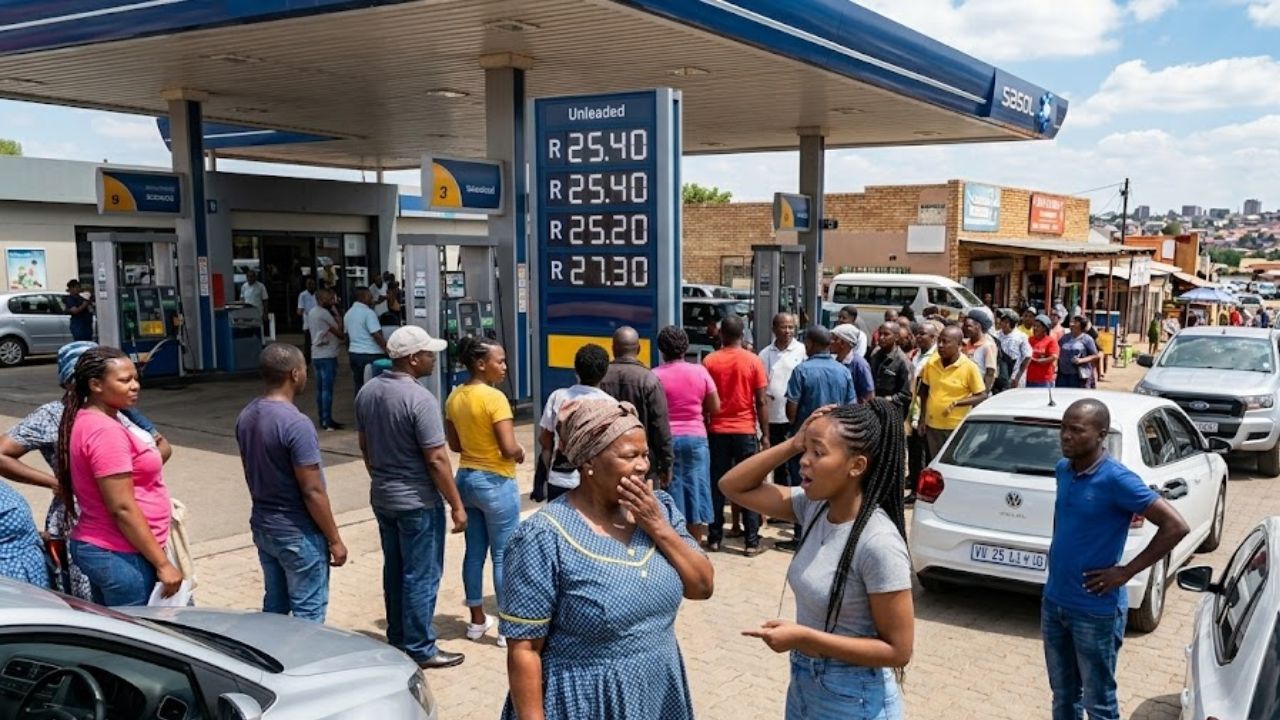
Global conflict drives oil price surge
One of the biggest factors behind the rising fuel costs is the escalating geopolitical conflict in the Middle East. At the end of February, tensions dramatically increased after the United States and Israel launched a major military operation targeting Iran’s capital.
The strike reportedly resulted in the death of Iran’s former Supreme Leader Ali Khamenei, triggering swift retaliation from Iran. Iranian forces responded by attacking US military bases in nearby countries, and the conflict has continued to escalate since then.
Financial markets were immediately shaken by the conflict, but the biggest impact has been seen in global oil prices. Crude oil prices jumped from below $60 per barrel at the beginning of the year to more than $110 per barrel in recent weeks.
Although prices have eased slightly since the initial spike, oil still remains above $100 per barrel, keeping fuel costs significantly elevated worldwide.
Weak rand adds to South Africa’s fuel pressure
The international conflict has also affected South Africa’s currency. Before the crisis, the rand had been performing strongly, trading below R16 to the US dollar. However, global uncertainty pushed investors toward safer markets, causing the rand to weaken.
As a result, the currency moved closer to R17 to the dollar, erasing much of the gains that had been made earlier in the year. While rising commodity prices for gold and platinum provided some support for the rand, the boost was not strong enough to fully offset the decline in investor confidence.

This combination of rising oil prices and a weaker currency creates a particularly difficult situation for South Africa. Since the country imports most of its fuel, both factors significantly increase the final cost paid by consumers.
Fuel levy increases will further raise prices
The situation for motorists will become even more challenging because April also marks the start of South Africa’s new financial year. With the new fiscal year comes the implementation of several tax adjustments, including increases in fuel levies.
Although the government decided not to introduce R20 billion in additional taxes for 2026 and provided some relief through inflation adjustments to tax brackets, fuel levies were still increased.
From 1 April, the government will add an extra 21 cents per litre in fuel-related taxes, pushing pump prices even higher.
The changes include:
The general fuel levy will increase by 9 cents per litre for petrol and 8 cents per litre for diesel, raising the levy to R4.10 per litre for petrol and R3.93 per litre for diesel.
The carbon fuel levy will rise by 5 cents per litre for petrol and 6 cents per litre for diesel.
The Road Accident Fund levy will increase by 7 cents per litre, taking it to R2.25 per litre.
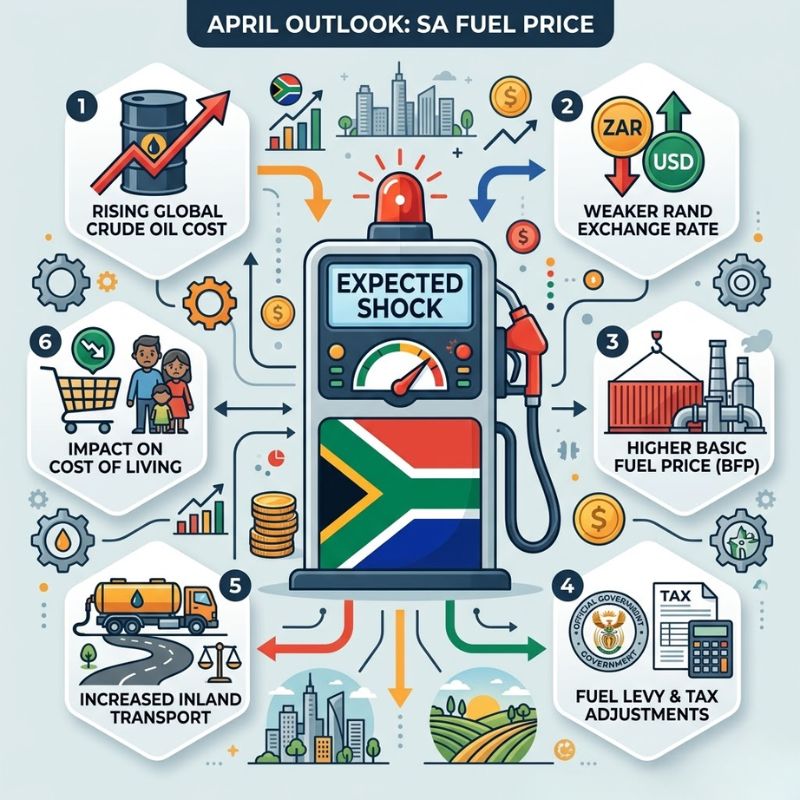
Calls to suspend fuel levy increases
Civil rights organisation AfriForum has urged the government to reconsider the planned fuel levy increases. The organisation warned that the combined impact of global oil prices, currency weakness, and tax hikes could severely affect both motorists and businesses.
AfriForum has written to Finance Minister Enoch Godongwana requesting that the planned fuel levy increase be suspended. Instead, the organisation suggested that the government introduce a temporary fuel tax reduction to soften the impact of the expected price shock.
A similar intervention was implemented in 2022 when the government temporarily reduced the general fuel levy by R1.50 per litre to help households cope with the global energy crisis triggered by the Russia-Ukraine war.
That relief measure was gradually removed as global fuel markets stabilised, with the levy slowly returning to normal levels. After that adjustment, the fuel tax was kept unchanged until 2025.