
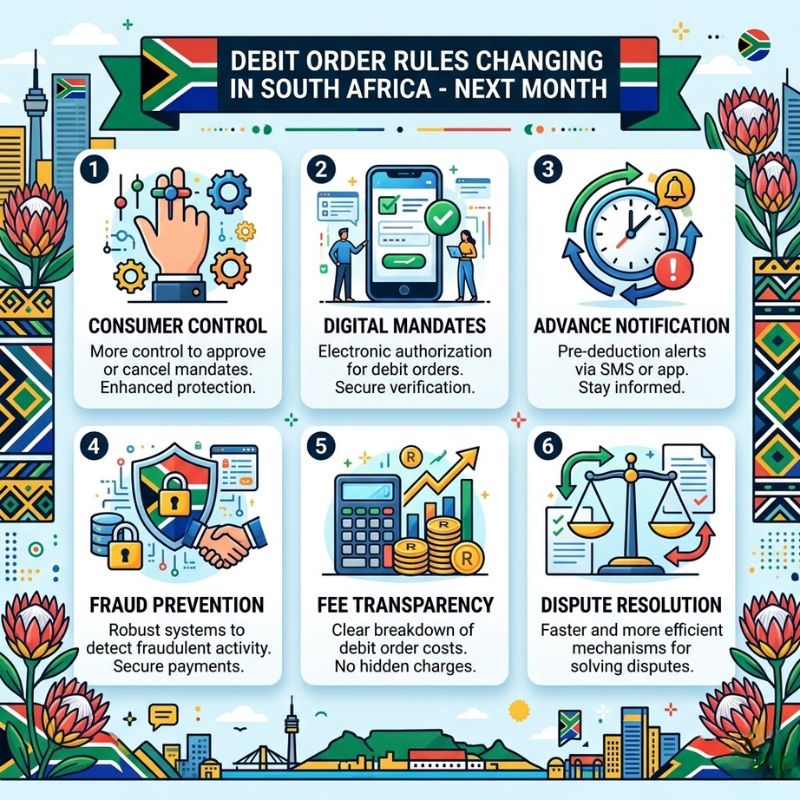
Significant changes to the way debit orders are handled in South Africa are set to come into effect soon, providing consumers with additional protection and a longer period to dispute transactions. Starting from 13 April 2026, consumers will have up to 60 days to dispute certain debit order transactions, depending on the applicable service rules. This update has been confirmed by both the South African Reserve Bank (SARB) and the Financial Sector Conduct Authority (FSCA), marking an important step in the evolution of the country’s payment systems.
The new rules aim to improve transparency and fairness for customers while strengthening trust in the banking system. By extending the dispute period, consumers will have more time to review their bank statements and identify any unauthorized or suspicious debit orders. Financial authorities believe this change will provide greater financial protection, especially as digital banking and automated payment systems continue to grow in popularity across South Africa.
Why the Debit Order System Is Being Updated
According to Pieter Brand, Head of Product at financial services company Hyphen, the latest reform is part of a broader effort to modernise debit order systems and address problems that have existed for several years. Brand explained that the system has already undergone significant changes over the past decade, particularly following a sharp increase in fraudulent debit orders around 2015.

During that time, many consumers began noticing unauthorized deductions from their accounts. A large portion of these fraudulent transactions were commonly set at around R99. This amount was often chosen deliberately because it remained below the alert thresholds used by many banks, meaning customers were less likely to receive notifications about the transactions.
In response to the growing number of complaints, banks began introducing easier ways for customers to dispute debit orders. Self-service options were added to ATMs, mobile banking apps, and online banking platforms, allowing consumers to reverse debit orders without needing to contact customer service call centres. These changes significantly simplified the process for disputing unauthorized payments.

Rise of DebiCheck to Prevent Fraudulent Debit Orders
Despite the introduction of easier dispute mechanisms, the number of disputes did not necessarily decline. Instead, as consumers became more aware of their rights and gained access to improved digital banking tools, it became much easier for them to challenge suspicious or incorrect debit orders.
To address this challenge, the financial industry introduced a more secure system known as DebiCheck. The system was developed after a directive issued by the South African Reserve Bank in 2017 and was officially launched in May 2021.
DebiCheck works by requiring customers to approve debit order mandates directly through their bank before any business is allowed to collect payments. In this process, a company sends an electronic copy of the payment agreement to the customer’s bank, and the consumer must confirm the mandate through their preferred banking channel, such as a mobile banking app, online banking portal, or ATM.
Once the mandate is verified and approved, the bank stores the agreement. As long as the business collects payments according to the agreed terms, those debit orders cannot be disputed, even under the extended 60-day dispute window.
Businesses May Face Greater Pressure Under the New Rules
The introduction of the longer dispute period could create challenges for companies that still rely on traditional debit order systems. Businesses that collect recurring payments may need to adjust their payment processes or adopt more secure collection methods to avoid potential financial losses.

Companies that operate in higher-risk sectors, such as credit providers or businesses offering hire-purchase agreements, have already widely adopted DebiCheck to protect their payment collections. According to Brand, for businesses that lend money or sell goods that are repaid over time, the additional cost of using secure payment authorization systems is generally justified.
However, some businesses may still rely on standard debit orders because of lower operational costs. With the new dispute window in place, these companies may experience an increase in disputed transactions, which could affect their revenue streams.
Companies Must Review Payment Agreements and Systems
Experts believe two types of businesses are most likely to be affected by the new rules. The first group includes companies dealing with higher-risk customers that have not yet adopted DebiCheck or similar secure systems. These businesses may need to move toward stronger payment verification tools or adjust their pricing models to account for possible dispute losses.
The second group includes service-based companies that provide ongoing services or goods, such as subscription-based offerings. These businesses often have the option to suspend services if payments stop, but they must still decide whether investing in more secure payment tools will reduce potential revenue losses caused by disputed transactions.
Brand also emphasized that businesses should carefully review their customer agreements and ensure that payment mandates clearly explain how debit orders will be collected. Well-defined agreements can reduce misunderstandings and help lower the likelihood of disputes.
New Payment Technologies Could Help Businesses Recover Faster
At the same time, new digital payment technologies are emerging that may help businesses manage disputes more effectively. One example is the PayShap Request to Pay system, which was introduced in December 2024. This tool allows businesses to send payment requests directly to customers, who can approve the transaction instantly through their banking app or preferred digital banking channel.
Such systems could offer faster payment confirmations and reduce reliance on traditional debit order structures. As financial technology continues to evolve, these tools may become an important part of how businesses manage recurring payments.
Brand concluded by noting that the banking industry has spent several years building the infrastructure needed to support these improvements. While the extended dispute period may create short-term pressure for businesses that have not modernised their collection processes, he believes that the pressure will likely drive innovation across the financial sector and encourage companies to adopt more secure and efficient payment solutions.